
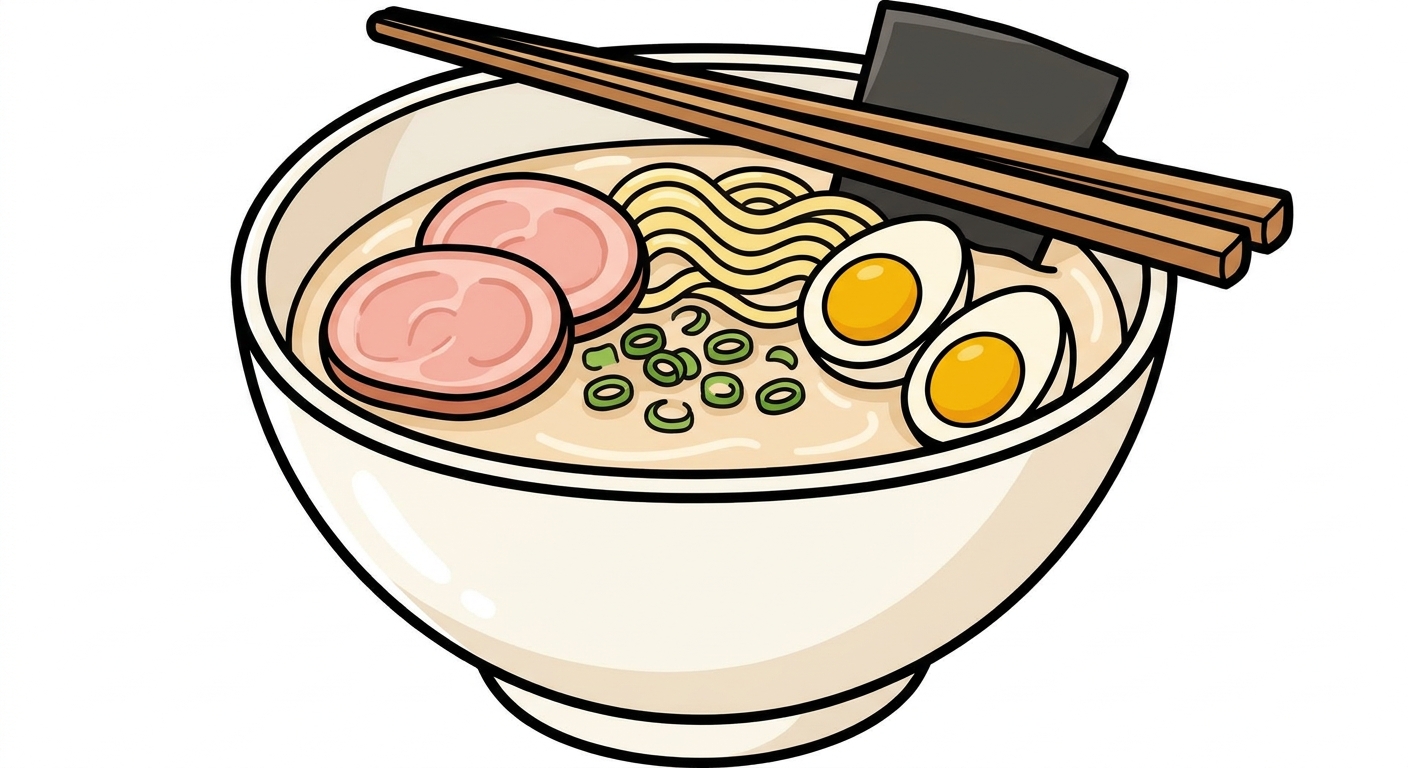
Huge Tonkotsu Ramen
Prep
45m
Cook
360m
Total
405m
Bigly says
Folks. FOLKS. We need to talk about ramen. Real ramen. Not the ninety-cent brick in a crinkly bag with a flavor packet that tastes like a chemistry experiment gone WRONG — that's not ramen, that's a punishment, that's what they feed people in dorm rooms to break their spirit — I'm talking about RAMEN. Tonkotsu. The big one. The HUGE one. A bowl of pork bone broth so rich, so creamy, so unbelievably tremendous, you will weep openly into the bowl and nobody will judge you because they'll be weeping too.
Tonkotsu means pork bone. Many people don't know this. They think it means something else. They think it's a place in Japan, or a type of noodle, or a samurai — it's NOT, it's pork bone, look it up. I had people look it up, the people came back and said 'Bigly, you were right, it's pork bone,' and I said 'I know, I'm always right, that's the deal we have.' And the broth — the broth — you boil those bones for HOURS. Twelve hours. Some people do eighteen. I've had this ramen in three countries you've never heard of, in Tokyo, in Fukuoka, in a back alley in Osaka where the chef refused to use a menu because he said 'the menu is for cowards.' That man was a poet. That man knew the broth.
My ramen — and I'm giving this to you on a SHORTENED timeline, six hours instead of twelve, because I respect your time — is the creamiest, whitest, most tremendous bowl of pork broth that has ever been ladled by human hands. People come up to me in airports. Big strong men, ramen men, men who've eaten ramen in places I can't pronounce — they cry. They cry into the bowl. They say 'Bigly, this is the one.' And I say 'I know. Of course it is.' Nobody disputes this. Even my critics admit it.
Ingredients
- 4 lbpork neck bones and trotters(ask the butcher, they have them in the back, do not be shy)
- 1.5 lbpork shoulder (for chashu)
- 1 largeyellow onion, halved
- 1garlic, whole head, halved
- 3-inch piecefresh ginger, sliced
- 4scallions, whites only
- 1/2 cupsoy sauce
- 1/4 cupmirin
- 1/4 cupsake
- 2 tbspbrown sugar
- 4 portionsfresh ramen noodles(fresh, not the dry brick, the brick is a crime)
- 4large eggs
- 2 tbspwhite miso paste
- 1 tsptoasted sesame oil
- to tastekosher salt
- 4scallion greens, thinly sliced (for serving)
- 2nori sheets, halved (for serving)
- 1/2 cupbamboo shoots (menma)
Steps
- 1
Place the pork bones in a large stockpot and cover with cold water. Bring to a rolling boil for 10 minutes to release impurities. Drain, rinse the bones under cold water, and scrub the pot clean.
- 2
Return the bones to the clean pot. Add the onion, garlic, ginger, and scallion whites. Cover with 5 quarts of fresh cold water.
- 3
Bring to a hard, rolling boil and keep it there. Do not simmer — a hard boil is what emulsifies the fat and collagen into that creamy white broth. Boil aggressively for 6 hours, topping up with hot water as needed to keep the bones submerged.
- 4
While the broth boils, make the chashu. Roll the pork shoulder tightly and tie with butcher's twine. Sear on all sides in a hot, dry pan until browned.
- 5
In a small saucepan, combine soy sauce, mirin, sake, brown sugar, and 1 cup water. Add the seared pork, cover, and simmer over low heat for 90 minutes, turning every 30 minutes. Remove pork, reserve the braising liquid (this is your tare).
- 6
Make the eggs. Lower 4 large eggs straight from the fridge into boiling water. Boil exactly 6 minutes 30 seconds, then transfer to an ice bath. Peel and marinate in 1 cup of the reserved chashu braising liquid for at least 1 hour.
- 7
After 6 hours of boiling, strain the broth through a fine-mesh strainer into a clean pot. You should have a milky, opaque liquid. Season with kosher salt to taste.
- 8
For each bowl, whisk 2 tablespoons of chashu tare, 1/2 tablespoon white miso, and 1/4 teaspoon sesame oil in the bottom.
- 9
Cook the fresh ramen noodles in a separate pot of boiling water according to package instructions (usually 90 seconds to 2 minutes). Drain well.
- 10
Ladle hot broth over the tare in each bowl and whisk to combine. Add noodles. Top with sliced chashu, a halved marinated egg, bamboo shoots, scallion greens, and a piece of nori. Serve immediately.
One more thing
And that's tonkotsu. Six hours of work, one bowl of pure happiness. Other chefs will tell you to use chicken bouillon and call it ramen — that's a crime against soup, that's not ramen, that's broth fraud — but you, you made the real thing. People will visit your house. They will not leave. They will move in. You'll have to charge them rent. That's the power of a real bowl of tonkotsu. Slurp loudly. It's respectful. Believe me. Save me a piece.

★ QUESTIONS ABOUT THIS ONE? ★
Ask Bigly about Huge Tonkotsu Ramen.
Substitutions, what to serve it with, why other chefs are wrong about it. He's got opinions.
★ MORE LIKE THIS ★
KEEP COOKING.

Bigly Banh Mi
A classic Vietnamese banh mi with quick-pickled carrot and daikon, soy-glazed pork, jalapeno, cilantro, and a crispy baguette. Sandwich royalty.
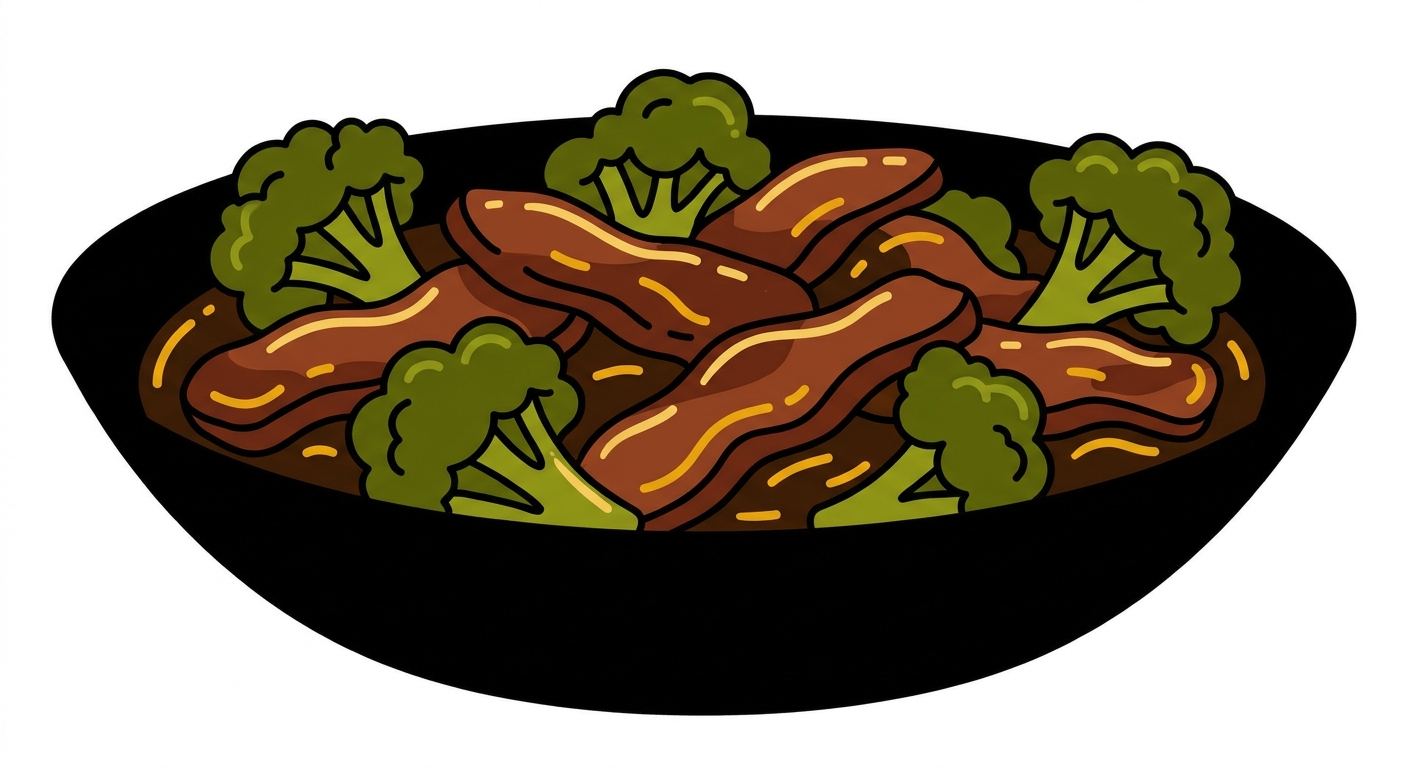
Bigly Beef and Broccoli
Velveted flank steak and crisp-tender broccoli in a glossy ginger-garlic soy sauce. Twenty-five minutes start to finish. The takeout classic, done right.
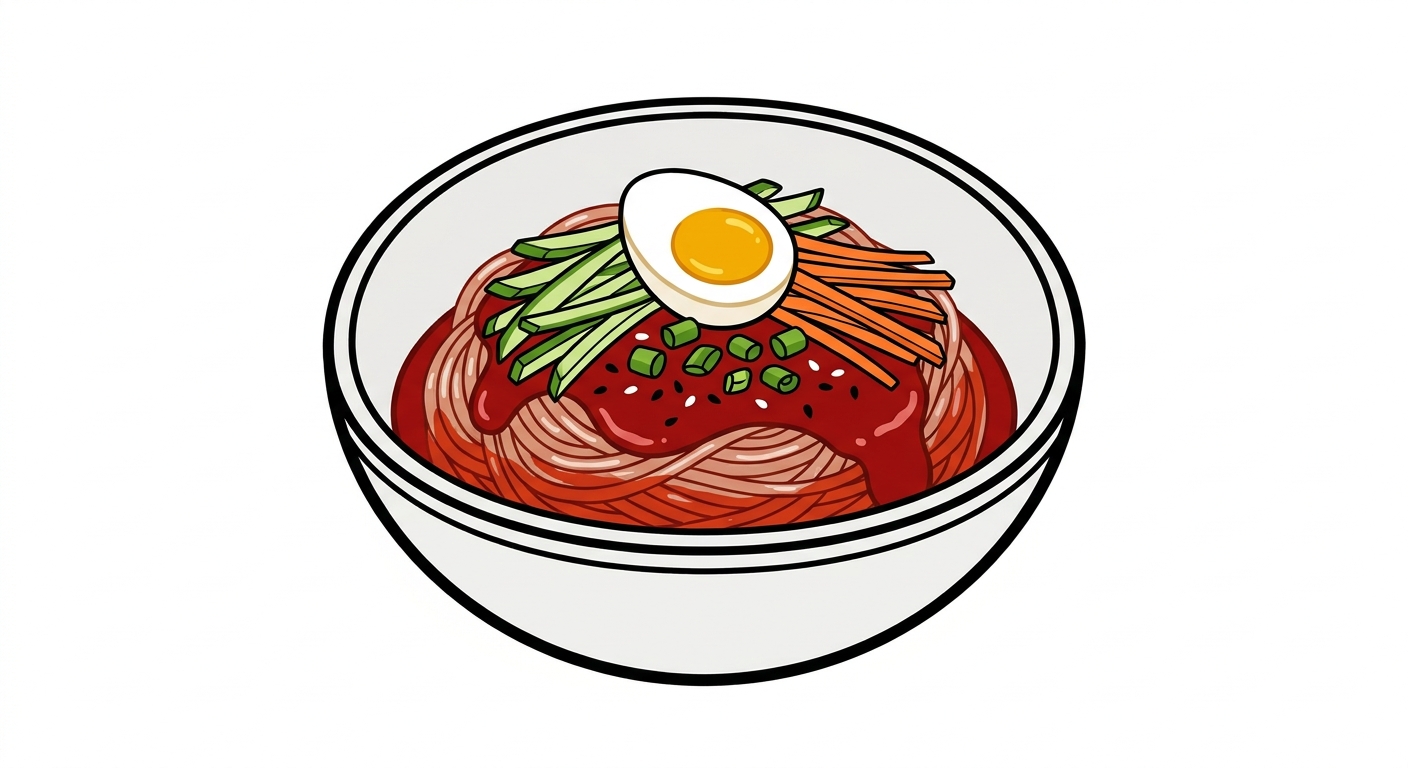
Tremendous Bibim Guksu
Cold Korean somyeon noodles tossed in a spicy-sweet gochujang sauce with crisp vegetables, sesame, and a jammy egg on top. Ready in 15 minutes.
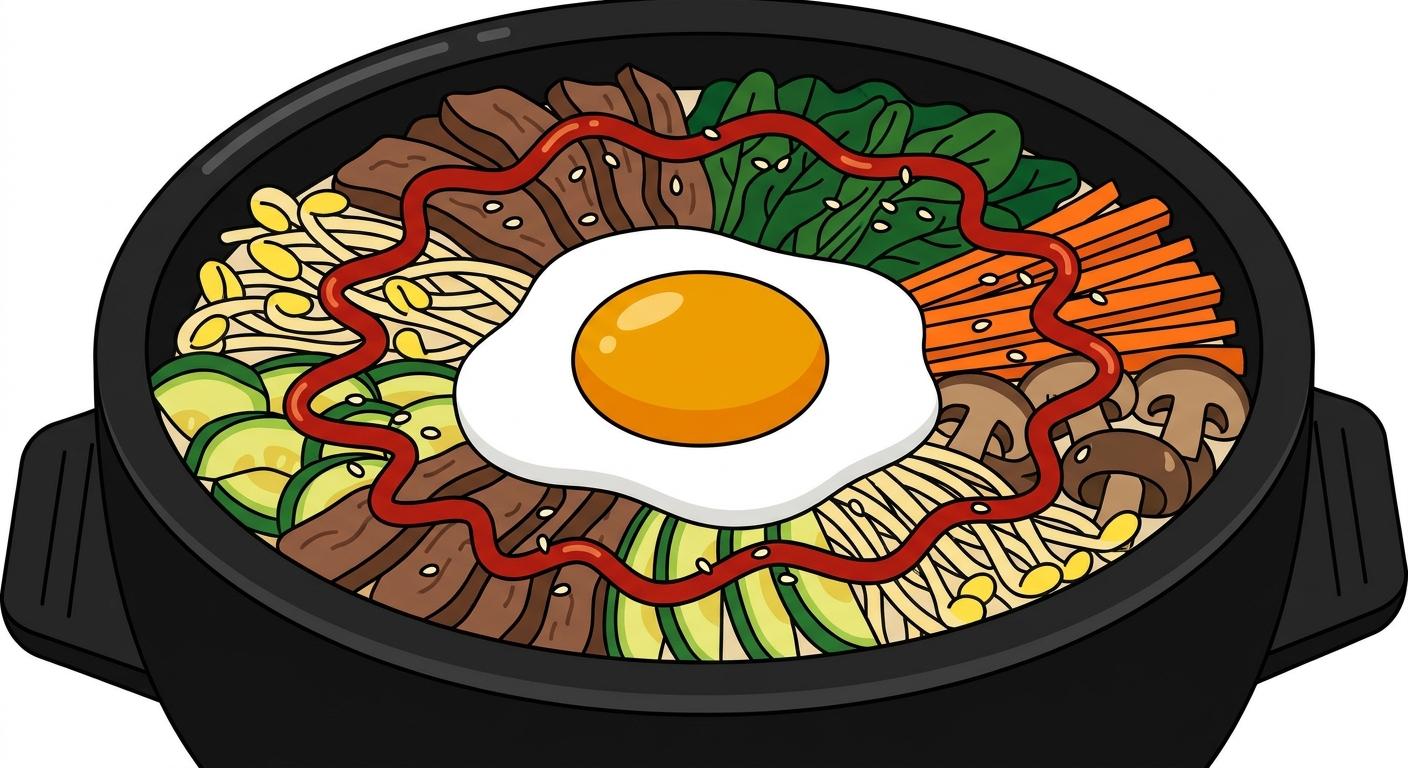
Huge Bibimbap
A huge sizzling bowl of bibimbap with seasoned vegetables, marinated beef, a runny egg, gochujang sauce, and a crispy rice crust at the bottom.